Alphabet Shifts to Hybrid Silicon Vendor Model Amid Compute Supply Constraints
Google Cloud is pivoting toward a hybrid hardware-software business model as internal compute capacity struggles to keep pace with record-breaking AI query demand.
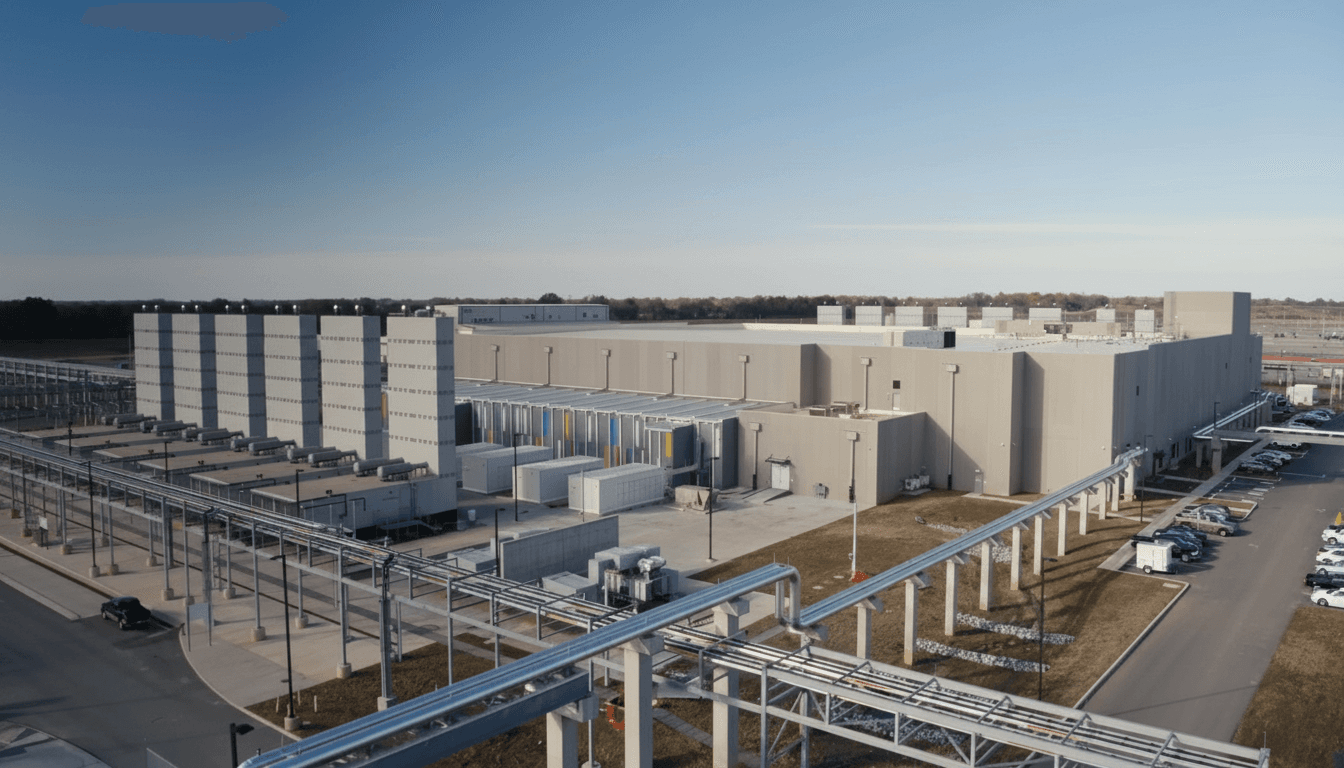
Alphabet has entered a significant agreement to secure additional compute capacity through June 2029, a move that underscores the severe infrastructure supply constraints currently hindering Google Cloud operations. This reliance on external compute capacity arrives as financial analysts revise their long-term models to account for Alphabet’s transition from a pure software-as-a-service provider to a hybrid vendor of both cloud software and proprietary silicon.
The shift is driven by the rapid adoption of Google’s AI Mode, which now serves over one billion monthly users and utilizes a complex query fan-out architecture that demands significant backend compute resources. Piper Sandler analyst Thomas Champion noted that this AI-driven search behavior is increasing overall query volume rather than cannibalizing traditional search, creating a sustained demand for high-performance inference capacity.
UBS analyst Stephen Ju recently restructured his Google Cloud financial model to isolate revenue from Tensor Processing Unit hardware sales, which are now being delivered directly into client data centers. These hardware-centric contracts accelerate revenue recognition compared to traditional software subscriptions, leading to a significant upward revision in revenue forecasts for 2026 and 2027. The firm’s 2027 revenue forecast now stands approximately 16% above the prior Wall Street consensus, reflecting the speed at which physical hardware deployments are hitting the balance sheet.
This transition to a hardware-sales model compresses earnings margins, as manufacturing and distribution costs for physical silicon differ substantially from the high-margin software services that previously defined the cloud division. UBS analysts noted that while revenue projections have surged, earnings-per-share estimates remain more conservative due to the thinner margins associated with direct hardware delivery. The divergence between the revenue upgrade and the earnings upgrade represents the fundamental change in Alphabet’s operational profile as it scales its silicon business.
Alphabet’s Tensor Processing Units are application-specific integrated circuits purpose-built for the matrix operations that underpin machine learning workloads. Unlike traditional CPUs that must load values from memory and perform calculations sequentially, these units use systolic arrays to pulse data through the chip without requiring constant memory access during the computation itself. This architectural choice provides higher throughput on the specific matrix operations required by modern neural networks, allowing Google to maintain performance levels that general-purpose hardware cannot match.
The company reported a massive contracted cloud backlog, which has seen substantial growth following a near-doubling in a single quarter as of early 2026. This backlog expansion demonstrates that enterprise demand for AI-optimized infrastructure remains largely decoupled from broader economic cycles, forcing the company to prioritize capacity expansion above short-term margin optimization. Alphabet’s first-quarter 2026 results set records across nearly every line, with revenue reaching $109.9 billion and net income rising 81% year-over-year.
Chief Financial Officer Anat Ashkenazi confirmed that capital expenditures will continue to rise throughout 2027, significantly exceeding the 2026 guidance range of $180 billion to $190 billion. CEO Sundar Pichai acknowledged that the company remains supply-constrained, with demand for AI services from Google Cloud and consumer products currently exceeding available capacity. This supply gap is the primary driver behind the company’s decision to seek external compute arrangements to bridge the shortfall until internal production scales further.
The strategic significance of this shift lies in Alphabet’s evolution from a software-first entity to a vertically integrated infrastructure provider. By controlling both the silicon design and the cloud software stack, the company aims to optimize the total cost of ownership for its largest enterprise clients. This integration creates a defensive moat, as customers who adopt proprietary silicon are less likely to migrate their workloads to competing cloud providers due to the specialized nature of the hardware.
Enterprise leaders must evaluate the long-term implications of this hardware-centric strategy, particularly regarding vendor lock-in and the potential for future supply chain volatility. While the current model provides immediate performance benefits, the reliance on proprietary silicon requires a deep commitment to the Google Cloud ecosystem that may limit architectural flexibility in multi-cloud environments. The transition also shifts the burden of infrastructure management, as clients must now account for hardware delivery schedules rather than simple software provisioning.
The long-term success of this hybrid strategy depends on Alphabet’s ability to maintain its silicon manufacturing cadence while managing the operational complexity of supporting external customers on proprietary hardware. Enterprise leaders should monitor the upcoming legal rulings, including the pending Stockholm Patent and Market Court judgment, as these regulatory outcomes may impose structural limits on Alphabet’s ability to leverage its integrated adtech and cloud ecosystems. These watchpoints will determine whether the current growth trajectory remains sustainable in a more heavily regulated global market.
TAGGED
REFERENCED
RELATED INTELLIGENCE
- INFRASTRUCTURE
BSEC Proposes Unified Back-Office Architecture to Mitigate Brokerage Fraud
The Bangladesh Securities and Exchange Commission is evaluating a centralized software framework to standardize brokerage monitoring and prevent asset misappropriation.
- AI
Pegasystems Q3 2026 earnings reveal enterprise AI deployment friction
The software provider faces extended sales cycles and operational hurdles as enterprise clients struggle to integrate complex AI workflows into existing architectures.
- AI
Enterprise AI Adoption Faces Operational Friction from Variable Cost Spikes
Enterprises struggle to maintain fiscal control as autonomous agent deployments outpace existing monitoring capabilities and budget governance.