Debugging AI Agent Failure Modes in Production Environments
Enterprise systems require new observability patterns to catch silent failures in AI agents that pass standard health checks but deliver incorrect results.
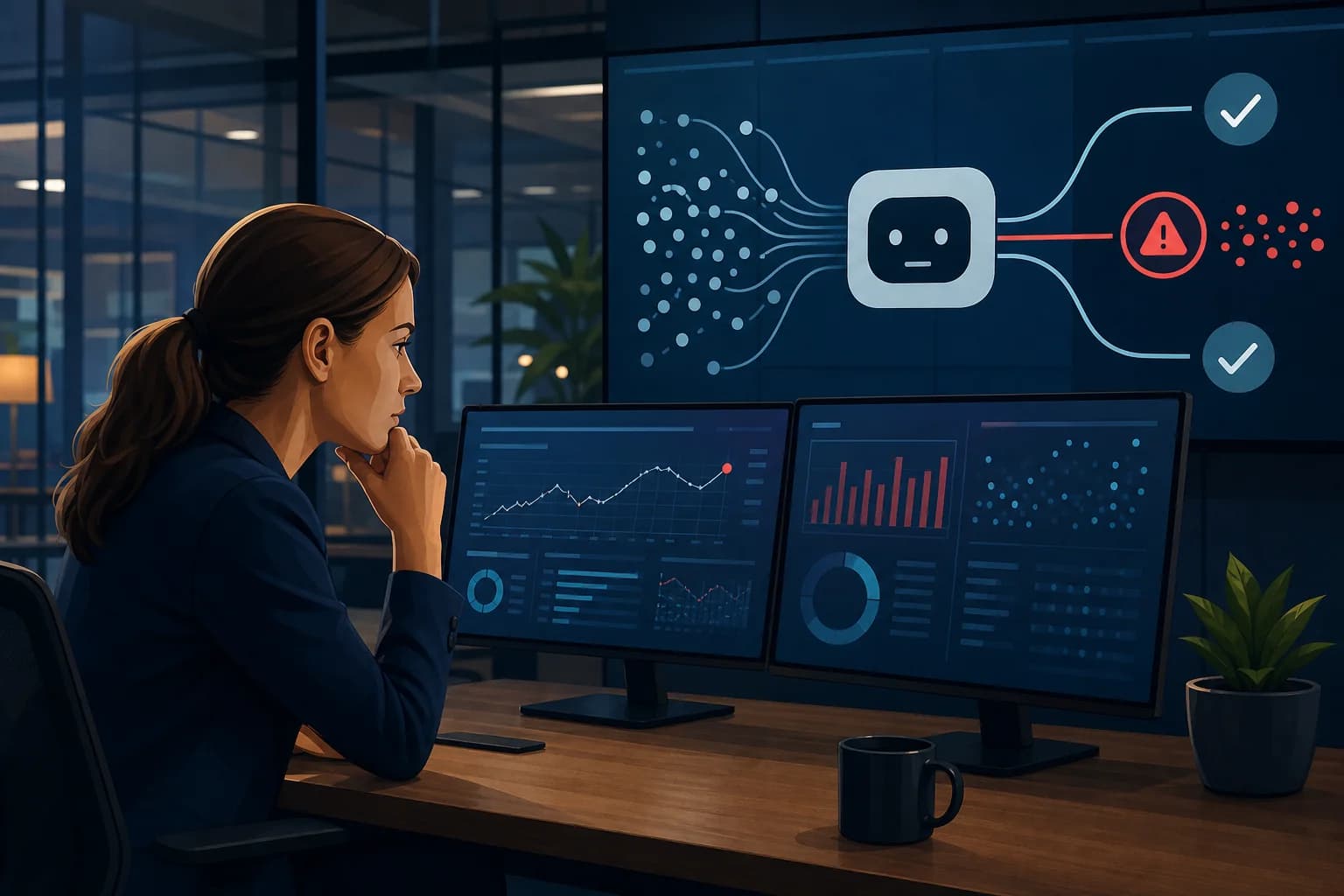
Enterprise software reliability faces a new paradigm as AI agents shift from experimental features to core production components. Traditional services signal failure through explicit errors like 500 status codes or latency spikes, but AI agents frequently return successful 200 responses despite delivering incorrect or hallucinated outputs.
Dynatrace data from 2026 indicates that while 77% of platform engineering teams incorporate some level of observability, only 40% maintain full integration across all deployments. This disparity creates a critical vulnerability when deterministic code is replaced by probabilistic agentic workflows.
A system that passes continuous integration and standard evaluation suites may still fail the end user by retrieving irrelevant data or misinterpreting context. These failures often remain invisible to standard monitoring tools that prioritize uptime over output accuracy.
Effective debugging requires moving beyond simple request traces to capture the full agent trajectory. Engineers must record model calls, tool invocations, and argument states as attributes on the root span at the start of execution.
This granular visibility allows teams to compare failed runs against successful historical baselines to isolate where logic diverges. By stitching spans across service boundaries through context propagation, architects can visualize the entire decision-making sequence of an agent.
Technical teams often misidentify the root cause by focusing solely on the generation phase of an agent. A common failure mode involves the orchestration layer, where redundant tool calls or missing filters inflate token usage and degrade response quality.
By isolating the retrieval logic from the generation model, architects can identify whether a failure stems from poor data sourcing or incorrect prompt construction. This separation of concerns is essential for debugging complex chains where multiple tools interact with the model.
The underlying mechanism for these failures often involves the harness code that manages tool retries and context window management. When a harness blindly retries a tool call without updating the query parameters, it creates a feedback loop that consumes excessive compute resources while failing to improve the answer quality.
Relevance metrics frequently mask validity errors in retrieval-augmented generation systems. A document may be semantically relevant to a user query while remaining factually invalid for the specific product version requested.
Relying on faithfulness scores alone fails to detect these logic gaps, necessitating the implementation of deterministic unit tests for retrieval filters. These tests ensure that the system adheres to hard constraints before the model ever attempts to synthesize an answer.
Developers should implement specific assertions that validate the metadata of retrieved documents against the user’s explicit constraints. Without these programmatic checks, the agent remains a black box that prioritizes semantic similarity over factual correctness, leading to a degradation in user trust.
Integrating these diagnostics into the development lifecycle requires a shift in how teams manage evaluation data. Storing metadata such as model IDs, retrieval configurations, and prompt versions alongside trace IDs provides the necessary context to reconstruct agent behavior.
Because the OpenTelemetry tracing API restricts updates to finished spans, teams must ensure all relevant state is captured during the initial execution window. This architectural decision forces developers to define their observability requirements before the agent begins its work.
The shift toward agentic systems demands that platform leaders treat AI observability as a first-class architectural requirement. Teams should prioritize regression tests that validate specific constraints—such as version filtering—without relying on the model to perform logical checks.
This approach ensures that the system remains testable even when the underlying inference remains probabilistic. By codifying these assertions, organizations can prevent common regressions that standard evaluation suites often overlook.
Future-proofing these deployments requires moving away from one-off evaluations toward continuous, trace-linked monitoring. As semantic conventions for GenAI continue to evolve, architects should standardize their instrumentation to avoid vendor lock-in and ensure consistent diagnostic capabilities.
Monitoring the interplay between tool orchestration and model output will remain the primary challenge for maintaining enterprise-grade reliability in the coming fiscal year. Leaders must prepare for a landscape where the definition of a successful request is no longer binary.
TAGGED
REFERENCED
- Dynatrace data from 2026dynatrace.com
- OpenTelemetry tracing APIopentelemetry-python.readthedocs.io
- semantic conventions for GenAIgithub.com
RELATED INTELLIGENCE
- AI
Pegasystems Q3 2026 earnings reveal enterprise AI deployment friction
The software provider faces extended sales cycles and operational hurdles as enterprise clients struggle to integrate complex AI workflows into existing architectures.
- AI
Enterprise AI Adoption Faces Operational Friction from Variable Cost Spikes
Enterprises struggle to maintain fiscal control as autonomous agent deployments outpace existing monitoring capabilities and budget governance.
- AI
Establishing Unit Economics for Enterprise AI Workflows
Enterprise leaders must shift from tracking aggregate AI spend to measuring cost-to-outcome ratios to ensure infrastructure investments deliver tangible business value.