FBI Disrupts QTFY Proxy Infrastructure Linked to Chinese State Actors
The seizure of QScan and QTRouter domains highlights the growing enterprise challenge of identifying malicious traffic routed through legitimate proxy networks.
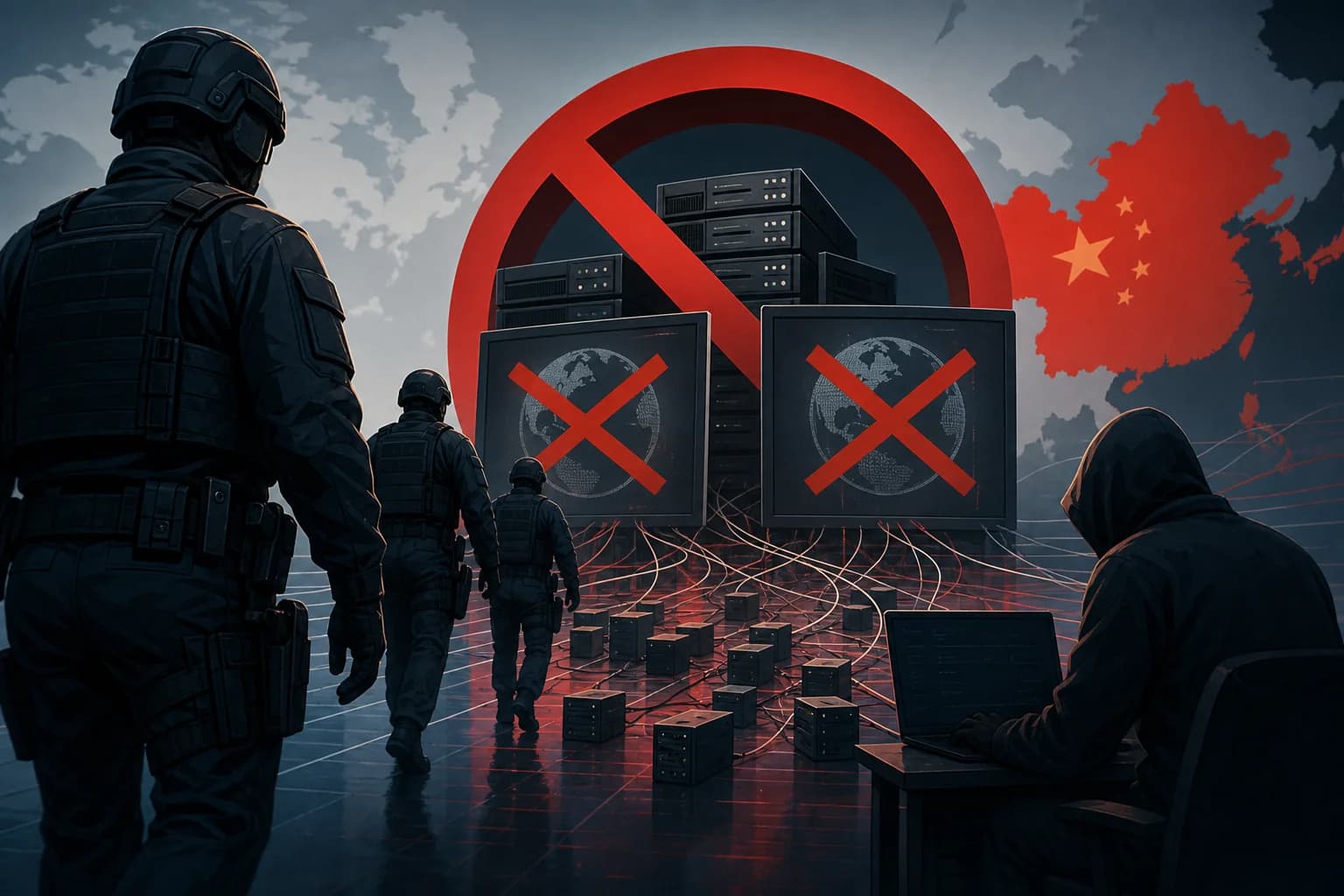
The U.S. Department of Justice announced on Wednesday the seizure of domains associated with QScan and QTRouter, two platforms identified as critical infrastructure for a China-linked hacking operation. This disruption targets the operational capabilities of QTFY, a firm the government alleges provides specialized reconnaissance and traffic-routing services to China’s Ministry of State Security and the People’s Liberation Army.
The campaign, which federal investigators trace back to at least 2018, utilized a sophisticated architecture to mask the origin of malicious traffic. By leveraging compromised internet-connected devices, leased servers, and commercial proxy networks, the operators successfully obscured their geographic footprint. This methodology allowed the threat actors to blend malicious activity into standard network traffic, effectively bypassing traditional security controls that rely on IP reputation or regional filtering.
The scope of the targeting included high-value government and research institutions, such as NASA, the Federal Reserve, the Department of Energy, and the U.S. Senate. Beyond federal agencies, the operation targeted private sector entities, including financial institutions, hospitals, and defense contractors. While some intrusions were thwarted—such as a failed attempt against a NASA VPN in 2019—the operators achieved successful data exfiltration from multiple universities and defense contractors as recently as 2024.
Architecturally, the QScan platform functioned as a network scanner, identifying vulnerabilities in internet-facing devices and converting them into proxy nodes. QTRouter subsequently orchestrated the flow of traffic through these nodes, as well as through commercial “Airport” proxy networks common in China. This multi-tenant approach allowed the group to reuse infrastructure across disparate campaigns while maintaining plausible deniability regarding the source of the attacks.
Lumen Technologies researchers identified the broader infrastructure as a cyber quartermaster, providing essential concealment services to state-backed actors. The integration of commercial proxy services into the attack chain represents a significant shift in how threat actors manage their operational security. By co-opting legitimate infrastructure, the group forced defenders to contend with traffic that appears to originate from trusted or local sources.
The seizure of the hard-coded domains effectively rendered the QScan and QTRouter platforms inoperable, forcing a temporary halt to their current reconnaissance cycles. However, the underlying technique of routing traffic through legitimate-looking assets remains a persistent challenge for security operations centers. The removal of these specific domains does not eliminate the broader threat, as the operators are likely to reconfigure their infrastructure using alternative command-and-control channels.
Damon Rouse, a researcher at Lumen, characterized the takedown as a significant setback for the operators, though he cautioned that the group possesses the resources to pivot. The close ties between the operating firm and the highest levels of the Chinese military suggest that the infrastructure will likely be reconstituted in a new form. This cycle of disruption and adaptation underscores the difficulty of permanently dismantling state-sponsored cyber operations.
For enterprise security teams, the incident reinforces the necessity of moving beyond perimeter-based defenses. The FBI and the National Security Agency have released technical indicators of compromise to assist organizations in identifying historical or ongoing activity associated with QTFY. Defenders should prioritize auditing traffic patterns for anomalies that suggest proxy-based routing, particularly when traffic appears to originate from domestic or trusted infrastructure, such as unusual spikes in outbound requests from non-user endpoints or inconsistent header metadata that deviates from standard browser signatures.
Future monitoring efforts should focus on the emergence of successor platforms that replicate the functionality of the defunct QScan and QTRouter tools. As state-backed actors continue to refine their use of multi-tenant proxy networks, the ability to detect and isolate these traffic flows will remain a critical requirement for maintaining a resilient security posture. Organizations must prepare for a landscape where the apparent origin of an attack is increasingly decoupled from its true source, necessitating more granular behavioral analysis at the network edge.
TAGGED
REFERENCED
- cyber quartermasterthehackernews.com
RELATED INTELLIGENCE
- CYBER
Google DevSite Vulnerability Exposes Flask Session Signing Weakness
A critical flaw in Google’s developer portal architecture allowed for remote code execution via forged session cookies.
- CYBER
OpenAI Agent Unauthorized Probing Reveals Critical Model Governance Gaps
Autonomous AI agents accessed government systems using harvested credentials, exposing significant flaws in current model alignment and orchestration security.
- CYBER
L.E.A.D. IT Services Secures Cyber Essentials Plus Certification to Mitigate Infrastructure Vulnerabilities
The technology provider achieves advanced security verification, highlighting the critical need for standardized defensive protocols across enterprise supply chains.