Microsoft AI chief predicts human parity in professional office tasks by 2026
Mustafa Suleyman projects that exponential compute growth will enable artificial intelligence to automate complex legal, accounting, and marketing workflows within 18 months.
Mustafa Suleyman, the chief executive of Microsoft AI, stated that artificial intelligence is on a trajectory to match human performance across a broad spectrum of professional office tasks within the next 18 months.
Speaking to the Financial Times, Suleyman identified lawyers, accountants, marketers, and project managers as the roles most exposed to this rapid advancement in automation capabilities.
The projection centers on the exponential growth of computational power, which Suleyman suggests will allow AI systems to write and review code more effectively than many human programmers.
This timeline represents one of the most aggressive estimates from a major technology leader, suggesting that systems will soon handle complex computer-based tasks with minimal human intervention.
Suleyman also noted that the democratization of model creation could soon mirror the ease of producing a podcast, allowing organizations to deploy highly specialized systems for niche operational needs.
The Microsoft executive emphasized that as processing capabilities improve, the cascading effects across knowledge-based professions will accelerate, potentially rendering current workflows obsolete.
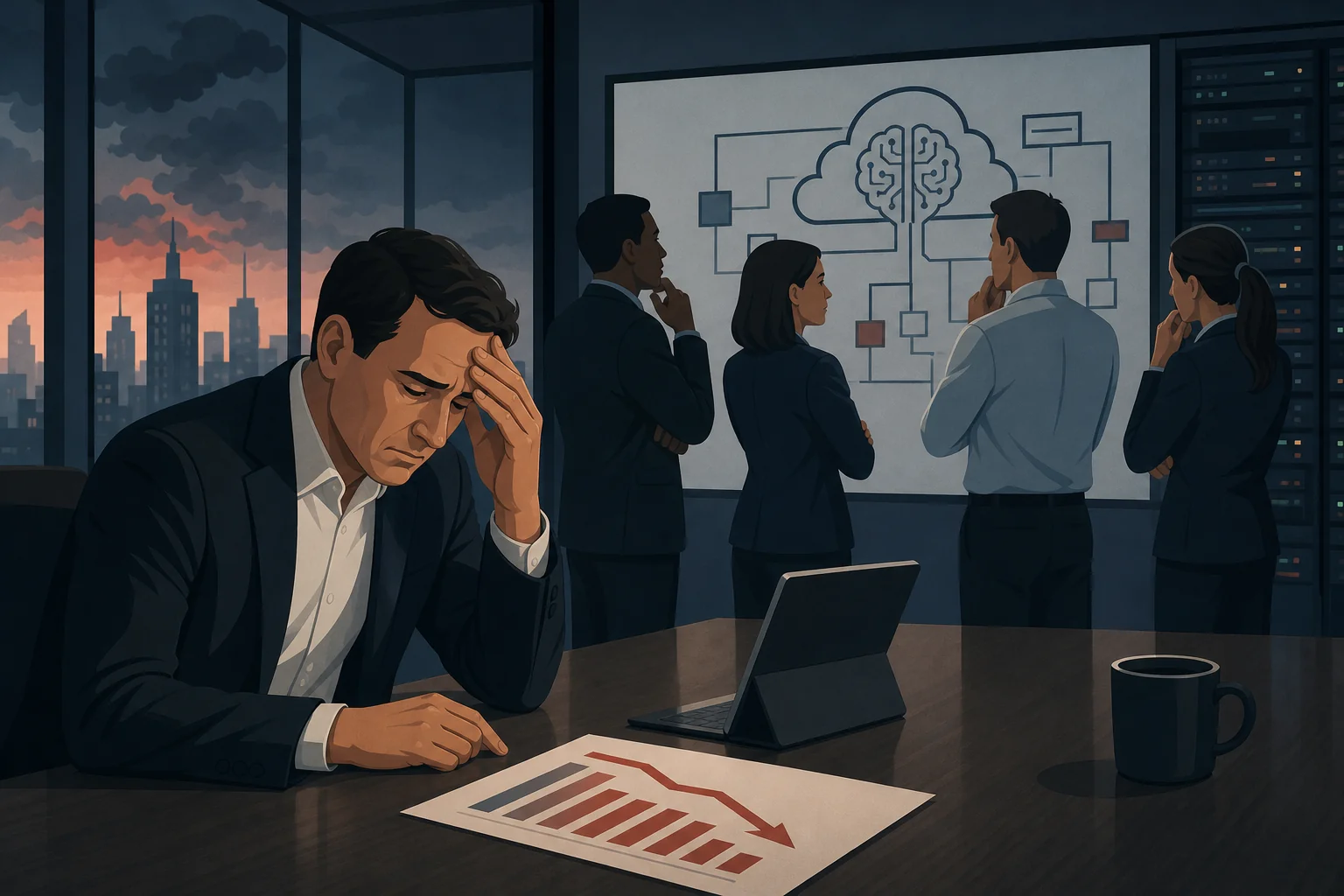
However, current industry data provides a stark contrast to these high-level projections, revealing significant friction in the actual deployment of these technologies within enterprise environments.
A 2025 report from Thomson Reuters indicated that while legal and accounting professionals are testing AI for document review and routine analysis, measurable productivity gains remain elusive for most firms.
Research from the nonprofit Model Evaluation and Threat Research (METR) further complicates the narrative, finding that software development tasks actually took 20 percent longer when using AI assistance.
This performance gap highlights a critical distinction between the theoretical capability of a model and the operational reality of integrating that model into a complex, regulated workflow.
For enterprise architects, the challenge lies not just in the intelligence of the model but in the orchestration layer required to manage data flow and maintain governance.
The transition from experimental pilots to core infrastructure requires a fundamental shift in how organizations handle proprietary data and security protocols.
While Suleyman emphasizes the compute-driven acceleration of these models, the infrastructure constraints of the modern enterprise stack often act as a bottleneck for real-time processing.
The operational burden of managing specialized AI models at scale could offset the efficiency gains promised by the automation of routine professional tasks.
CIOs must evaluate whether the current generation of hardware and networking can support the low-latency requirements of autonomous agents performing project management or legal analysis.
Furthermore, the risk of vendor lock-in increases as organizations build deep dependencies on specific model architectures that may become obsolete within Suleyman’s 18-month window.
The technical or operational constraint behind this story is the massive disparity between model benchmarks and the integration surface of legacy enterprise systems.
Elon Musk and OpenAI chief executive Sam Altman have expressed similar views on the speed of development, with Musk suggesting artificial general intelligence could arrive as early as this year.
Altman and researcher Matt Shumer have both noted personal unease as the technologies they helped build render earlier versions of work and software development redundant.
Despite these warnings, the immediate priority for technical leaders is closing the gap between model potential and the measurable efficiency of their existing talent.
The upcoming milestones for the enterprise will likely involve the refinement of retrieval-augmented generation (RAG) and the hardening of security postures against model-based vulnerabilities.
Leaders should monitor the divergence between high-level executive predictions and the ground-level telemetry of developer and professional productivity over the coming quarters.
The true test of Suleyman’s timeline will be whether the next generation of compute can overcome the structural and cultural barriers that currently limit AI’s impact on the bottom line.
Enterprises should focus on building flexible data pipelines that can accommodate rapid model iterations without requiring a full overhaul of the underlying architecture.
TAGGED
REFERENCED
RELATED INTELLIGENCE
- AI
Pegasystems Q3 2026 earnings reveal enterprise AI deployment friction
The software provider faces extended sales cycles and operational hurdles as enterprise clients struggle to integrate complex AI workflows into existing architectures.
- AI
Enterprise AI Adoption Faces Operational Friction from Variable Cost Spikes
Enterprises struggle to maintain fiscal control as autonomous agent deployments outpace existing monitoring capabilities and budget governance.
- AI
Establishing Unit Economics for Enterprise AI Workflows
Enterprise leaders must shift from tracking aggregate AI spend to measuring cost-to-outcome ratios to ensure infrastructure investments deliver tangible business value.