Broadcom VMware Cloud Foundation 9.1 targets private AI infrastructure through unified Kubernetes orchestration
The latest VCF release attempts to consolidate fragmented AI stacks into a private cloud model to address data sovereignty and infrastructure costs.
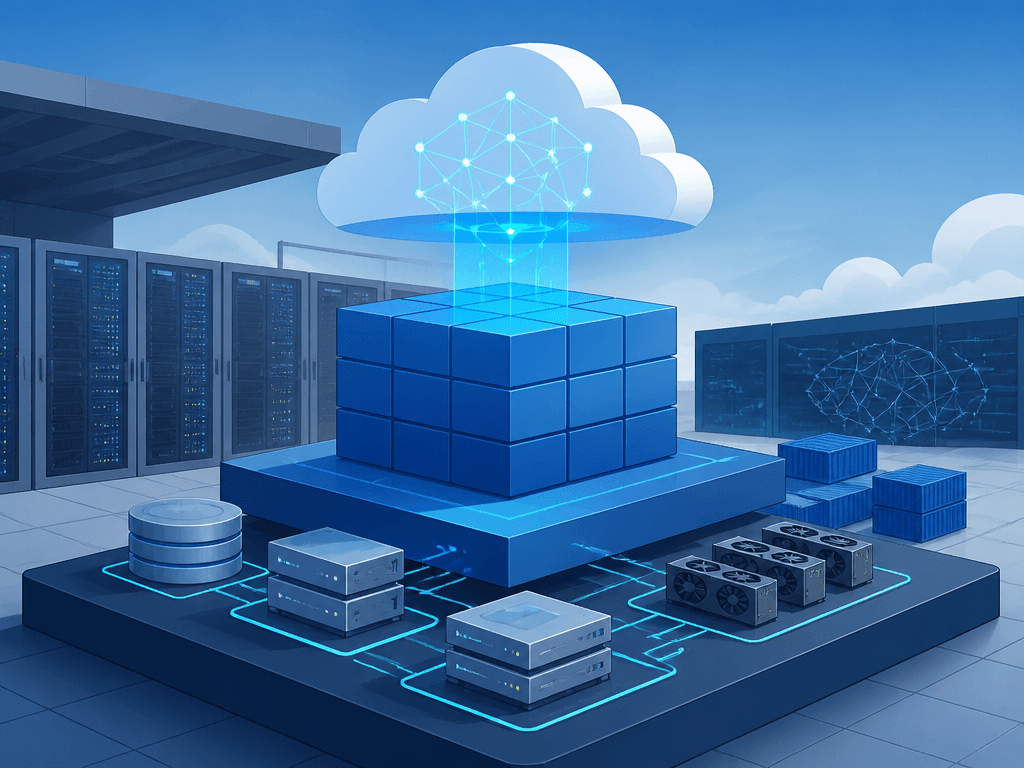
Broadcom released VMware Cloud Foundation 9.1 earlier this month, signaling a shift toward private cloud environments optimized for artificial intelligence.
The platform functions as an integrated system for managing Kubernetes-native workloads across heterogeneous hardware, including both central processing units and graphics processing units.
This launch addresses a growing enterprise demand for infrastructure that balances the performance of specialized silicon with the security of on-premises data control.
Technical leaders are increasingly evaluating private cloud alternatives as the costs associated with public cloud AI inference and data egress continue to scale.
VCF 9.1 provides a unified framework intended to replace the fragmented stacks often required to support large-scale inference and agentic AI deployments.
According to Broadcom, the platform is designed to maintain data sovereignty while providing the compute density necessary for modern machine learning operations.
The release coincides with Broadcom’s broader financial strategy, which includes a revenue guidance of approximately $22.0 billion for the second quarter of fiscal 2026.
To support its growth narrative, the company has also announced a $10.0 billion share buyback program alongside these infrastructure updates.
These moves reflect a business model that increasingly relies on the synergy between custom AI silicon and advanced virtualization software.
Financial analysts note that Broadcom’s long-term projections require a significant expansion in both its hardware and software divisions through the end of the decade.
The company has set an ambitious target of reaching $214.5 billion in revenue and $93.7 billion in earnings by the year 2029.
Achieving these figures would necessitate a compound annual revenue growth rate of approximately 46.5 percent over the next several years.
This growth trajectory depends heavily on the continued capital expenditure of a small number of hyperscale cloud providers and large enterprise customers.
Some market observers remain cautious, pointing out that high customer concentration poses a risk if top-tier clients reduce their infrastructure spending.
To own Broadcom, you need to believe its custom AI chips and VMware software can both keep growing while customer concentration and high valuation stay manageable.
Yahoo Finance reported that the narrative for Broadcom hinges on whether its VMware integration can offset potential volatility in the semiconductor market.
The technical significance of VCF 9.1 lies in its ability to abstract the complexities of mixed-hardware environments for DevOps and infrastructure teams.
By providing a consistent operating model, the platform aims to reduce the operational burden of deploying and scaling generative AI models.
Agentic AI, which requires autonomous reasoning and multi-step task execution, places unique demands on the underlying compute and networking layers.
VCF 9.1 attempts to solve these challenges by providing high-bandwidth connectivity and low-latency access to distributed GPU clusters.
The platform also addresses the supply chain constraints associated with AI hardware, such as the availability of rare earth metals like terbium used in high-end GPUs.
While Broadcom does not produce these metals, the efficiency of its software stack is intended to maximize the utility of existing hardware investments.
For the enterprise architect, the adoption of VCF 9.1 represents a commitment to a long-term private cloud strategy rather than a temporary hybrid arrangement.
This approach requires a careful assessment of the total cost of ownership compared to the flexibility offered by hyperscale public clouds.
Organizations in regulated industries may find the data sovereignty features of VCF 9.1 particularly compelling as they navigate evolving privacy laws.
However, the transition to an AI-native private cloud involves significant implementation risks and requires specialized internal expertise in Kubernetes and GPU orchestration.
Broadcom must demonstrate that the VMware ecosystem can remain competitive as open-source alternatives and specialized AI startups enter the infrastructure space.
The success of VCF 9.1 will likely be measured by its adoption rate among large organizations seeking to internalize their AI research and development.
- Support for mixed CPU and GPU hardware environments.
- Kubernetes-native orchestration for containerized AI workloads.
- Unified management for inference and agentic AI operations.
Infrastructure leaders should monitor the platform’s ability to integrate with existing legacy systems without introducing new layers of vendor lock-in.
As the market for AI compute matures, the distinction between general-purpose virtualization and specialized AI orchestration will become increasingly critical.
Enterprise architects should evaluate VCF 9.1 based on its performance in production-level inference tasks rather than its theoretical capacity for model training.
The next milestone for Broadcom will be the integration of its custom silicon telemetry directly into the VMware management interface for real-time optimization.
Stakeholders should watch for further consolidation in the private cloud market as Broadcom leverages its dominant position in the networking and compute layers.
TAGGED
RELATED INTELLIGENCE
- INFRASTRUCTURE
BSEC Proposes Unified Back-Office Architecture to Mitigate Brokerage Fraud
The Bangladesh Securities and Exchange Commission is evaluating a centralized software framework to standardize brokerage monitoring and prevent asset misappropriation.
- INFRASTRUCTURE
Legrand Integrates Karman AI to Optimize Data Center Power Distribution
The partnership aims to reclaim stranded power capacity in high-density AI environments through edge-based intelligence.
- INFRASTRUCTURE
AI Infrastructure Choices Define Cost Attribution Limits
Enterprise architectural decisions regarding managed versus self-hosted compute environments determine the feasibility of granular AI cost governance.