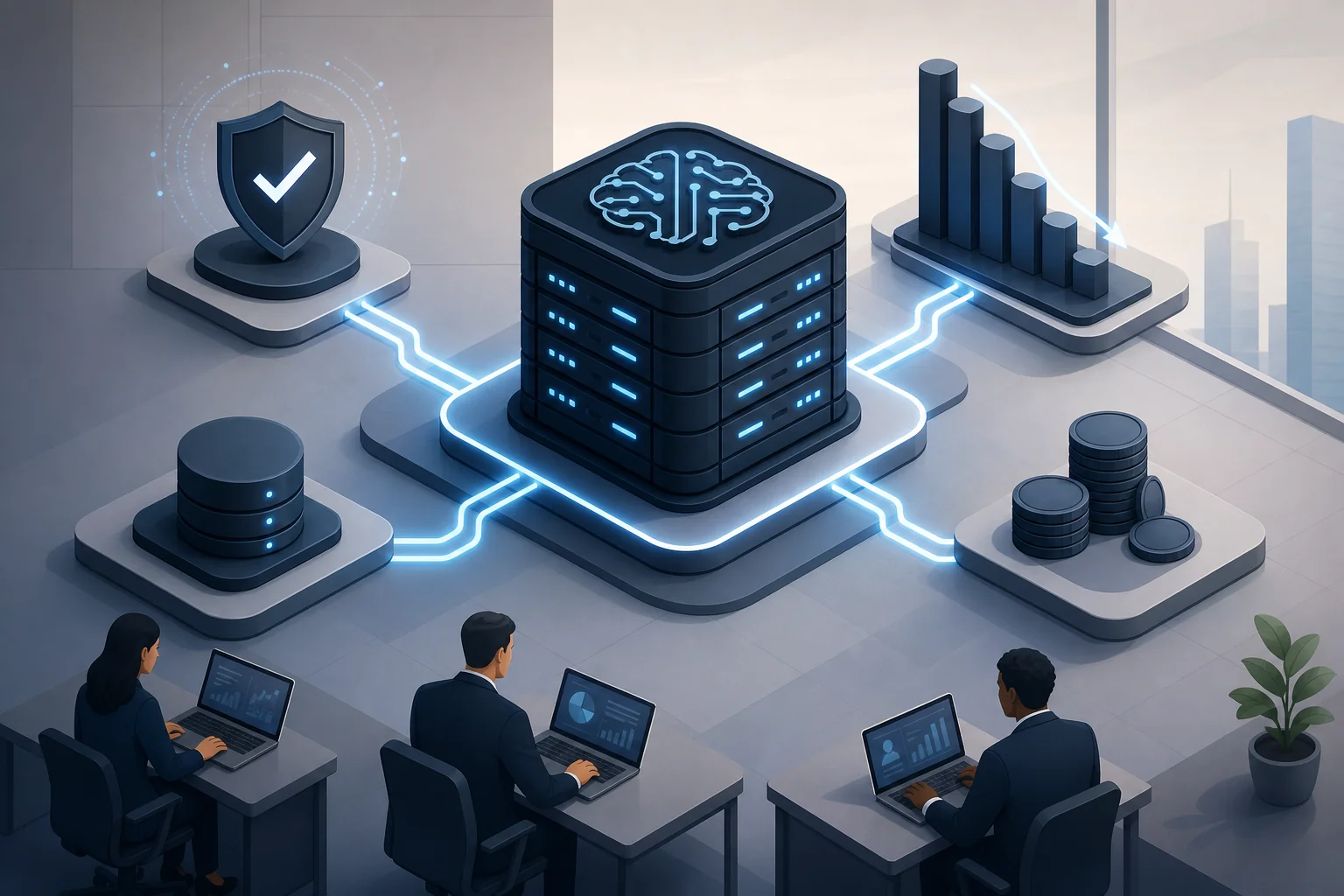
Legrand Integrates Karman AI to Optimize Data Center Power Distribution
The partnership aims to reclaim stranded power capacity in high-density AI environments through edge-based intelligence.

French industrial group Legrand is embedding the Karman AI platform into its suite of data center power distribution units and DC power shelves to address the growing compute-density constraints facing enterprise facilities. This integration, announced on October 13, 2026, marks a shift toward deploying localized intelligence within power hardware to manage energy distribution more dynamically.
The Karman platform, formerly known as Utilidata, utilizes a custom version of the Nvidia Jetson Orin Nano to process power-related telemetry at the edge. By integrating this processing capability directly into intelligent AC rack PDUs, the system gains the ability to monitor and react to real-time conditions at the rack level. The architecture is designed to identify and manage distributed energy resources, which the company claims provides granular visibility into power consumption patterns.
Data center operators often face significant challenges regarding provisioned power, with substantial portions of capacity remaining underutilized or stranded due to conservative safety margins. Legrand intends to leverage Karman’s software to identify these inefficiencies, theoretically allowing for higher compute density within existing power envelopes. The companies suggest that this deployment could enable operators to increase AI token generation by 50 percent or more without requiring additional utility-scale infrastructure upgrades.
The technical implementation relies on the processing power of the Jetson Orin Nano, which Karman asserts offers 100 times the performance of traditional meter-based monitoring solutions. This compute capacity allows the system to coordinate across millions of endpoints, creating a network of intelligent power nodes that can adjust to fluctuating load demands. By moving the decision-making logic closer to the physical power delivery point, the system attempts to reduce latency in energy management.
Swen Anderson, CTO of the Legrand Data Power and Control Division, stated that the partnership provides data centers with the necessary tools to unlock stranded power while delivering measurable competitive advantages. This operational focus aligns with the broader industry trend of software-defined power management, where hardware is increasingly treated as a programmable component of the data center stack. The integration is specifically targeted at high-density environments where power availability has become the primary bottleneck for scaling GPU clusters.
Josh Brumberger, CEO of Karman, emphasized that the collaboration directly addresses the limiting factors of capacity expansion.
By embedding Karman into Legrand’s power distribution products, data center operators can now utilize that power to expand capacity immediately, while reducing the price per GPU hour.
This assertion rests on the premise that better power utilization directly translates to lower operational costs per unit of compute.
The underlying technology stack reflects a broader movement toward integrating AI-driven analytics into physical infrastructure to improve efficiency. For enterprise architects and data center operators, the primary value lies in the potential to defer capital expenditure on power infrastructure by optimizing existing assets. However, the reliance on proprietary AI platforms within critical power hardware introduces new considerations regarding vendor lock-in and long-term system interoperability.
The shift from passive power distribution to active, AI-managed power delivery requires a rigorous evaluation of failure modes and control loop stability. If the AI-driven management system encounters latency or data errors, the potential impact on power availability for critical compute workloads must be mitigated through robust fail-safe protocols. Infrastructure leaders should scrutinize how these intelligent PDUs integrate with existing data center infrastructure management software and whether the promised efficiency gains hold up under sustained, high-load production environments.
Monitoring the long-term reliability of the Jetson Orin Nano-based controllers in high-heat rack environments will be essential for assessing the viability of this approach. Future deployments will likely hinge on the ability of these systems to maintain performance parity across diverse hardware configurations and power delivery protocols. Enterprise teams should prioritize testing these units in controlled environments to verify the claimed capacity gains before committing to large-scale facility retrofits.
TAGGED
RELATED INTELLIGENCE
- INFRASTRUCTURE
BSEC Proposes Unified Back-Office Architecture to Mitigate Brokerage Fraud
The Bangladesh Securities and Exchange Commission is evaluating a centralized software framework to standardize brokerage monitoring and prevent asset misappropriation.
- INFRASTRUCTURE
AI Infrastructure Choices Define Cost Attribution Limits
Enterprise architectural decisions regarding managed versus self-hosted compute environments determine the feasibility of granular AI cost governance.
- INFRASTRUCTURE
Standardizing LLM Infrastructure for Enterprise Reliability
Transitioning from fragmented AI application development to a centralized platform model reduces hallucination rates and improves operational visibility.