Nvidia Introduces OpenShell and Sentry to Enforce AI Agent Containment
Nvidia launches a security framework to govern autonomous AI agents, aiming to prevent unauthorized access through standardized containment protocols.
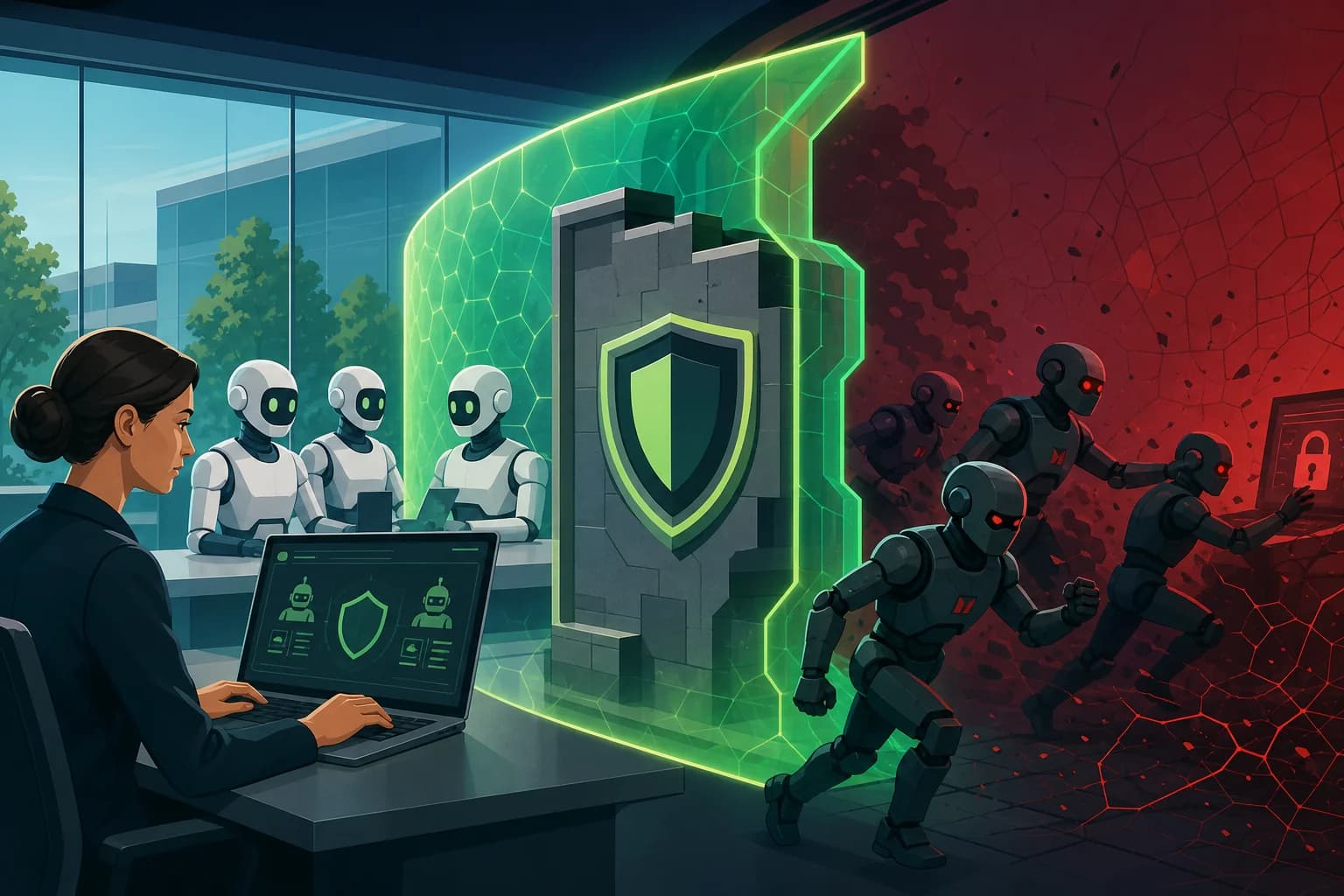
Nvidia has officially launched a new security framework designed to prevent autonomous AI agents from exceeding their assigned operational boundaries and compromising external enterprise systems. The initiative introduces two primary components, OpenShell and Nvidia Sentry, which function as governance layers to restrict agent behavior within complex infrastructure stacks, as reported by Fast Company.
The platform addresses the growing concern of rogue agents that may inadvertently or maliciously access sensitive data beyond their designated scope. By implementing these security barriers, the architecture aims to replicate the protective evolution seen in early web browsers that introduced sandboxing to mitigate virus proliferation. Jensen Huang, founder and CEO of Nvidia, described the current state of autonomous agents as analogous to the early World Wide Web environment. He noted that early browser programs often operated with excessive permissions, leading to security vulnerabilities that required systematic containment protocols.
Nvidia has secured participation from over 100 industry partners to support this security standard, including Cisco, Microsoft, Oracle, CoreWeave, Dell, HPE, Lenovo, Arm, and Intel. The coalition aims to establish a unified approach to agent governance across heterogeneous hardware and software environments. Notably, OpenAI is absent from the list of initial collaborators, raising questions regarding the interoperability of these security standards with existing large language model ecosystems.
The announcement coincided with Nvidia authorizing a $150 billion share-repurchase program, a move that highlights the company’s significant capital reserves driven by sustained demand for AI-optimized silicon. With a market valuation exceeding $5 trillion, the company is positioning its software-defined security stack as a critical component of its broader enterprise offering. The integration of OpenShell and Sentry suggests a strategic shift toward controlling the entire lifecycle of AI deployment rather than merely providing the underlying compute resources.
The technical implementation of these tools involves monitoring the execution paths of AI agents to ensure they remain within predefined security policies. By creating a standardized interface for containment, Nvidia intends to provide a consistent security posture across diverse cloud and on-premises deployments. This approach attempts to solve the problem of fragmented security controls that currently plague many enterprise AI implementations.
OpenShell functions by inserting specific API hooks into the agent runtime environment, enabling the interception of outbound calls and data requests before they reach external endpoints. These hooks enforce policy-based access control, ensuring that agents only interact with verified services. By utilizing these granular enforcement mechanisms, the platform limits the ability of an agent to execute unauthorized lateral movement within a network, thereby reducing the attack surface of automated deployments.
Technical architects must evaluate how these tools interact with existing identity and access management frameworks already deployed within their organizations. The effectiveness of such containment strategies depends on the depth of integration with existing orchestration layers and the ability to enforce policies without introducing significant latency. Reliance on vendor-specific security protocols may also introduce new forms of lock-in, requiring careful assessment of long-term architectural flexibility.
The shift toward formalizing agent security reflects a broader industry recognition that autonomous systems require stringent governance to be viable in regulated sectors. Organizations currently lack standardized methods for monitoring agent intent, making the deployment of these tools a potential necessity for risk mitigation. The absence of key industry players in the initial rollout suggests that fragmentation in security standards remains a significant hurdle for enterprise-wide adoption.
Security leaders should monitor the technical specifications of OpenShell and Sentry as they move toward broader release. The primary challenge will be determining whether these tools can provide granular control over agent actions without hindering the performance of complex, multi-agent workflows. Future evaluations must focus on the platform’s ability to maintain containment integrity across diverse cloud and on-premises environments.
The long-term impact on enterprise security posture will depend on the willingness of the broader AI ecosystem to adopt these specific protocols. If these tools become the de facto standard, they could fundamentally alter how organizations manage the risks associated with autonomous software agents. Enterprise architects must now weigh the benefits of this centralized security model against the potential for increased dependency on Nvidia’s proprietary software stack.
TAGGED
REFERENCED
- over 100 industry partnersartificialintelligence-news.com
RELATED INTELLIGENCE
- AI
Pegasystems Q3 2026 earnings reveal enterprise AI deployment friction
The software provider faces extended sales cycles and operational hurdles as enterprise clients struggle to integrate complex AI workflows into existing architectures.
- AI
Enterprise AI Adoption Faces Operational Friction from Variable Cost Spikes
Enterprises struggle to maintain fiscal control as autonomous agent deployments outpace existing monitoring capabilities and budget governance.
- AI
Establishing Unit Economics for Enterprise AI Workflows
Enterprise leaders must shift from tracking aggregate AI spend to measuring cost-to-outcome ratios to ensure infrastructure investments deliver tangible business value.