Sandworm group pivots toward operational technology targets in critical infrastructure shift
Security researchers report a strategic transition by the Russian state-backed threat actor from enterprise IT infiltration to direct disruption of industrial control systems.
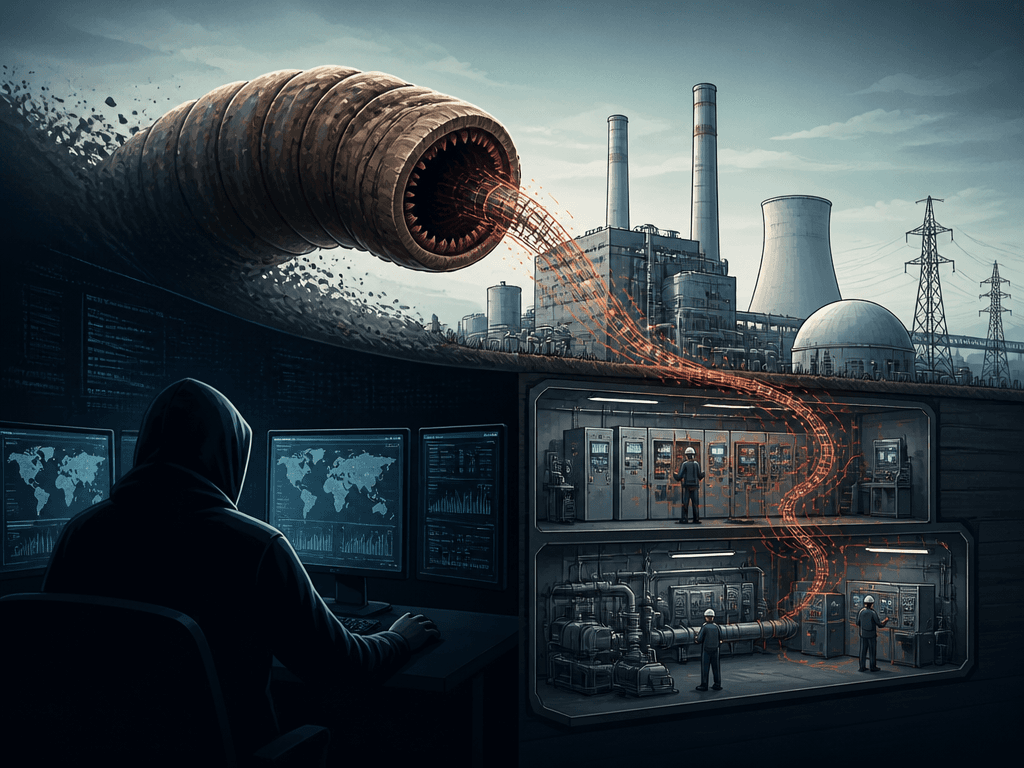
The Russian state-sponsored threat group known as Sandworm is transitioning its primary operational focus from enterprise IT network infiltration to the exploitation of operational technology environments. This strategic shift, reported by security researchers, indicates a heightened risk of physical disruption to global critical infrastructure.
Findings indexed by IT Security News suggest that the group is no longer content with data exfiltration from corporate systems. The threat actor is now actively targeting the industrial control systems that manage essential services like energy and water.
Security researchers at GBHackers Security warn that this shift allows for the possibility of real-world disruption where physical assets are directly manipulated. This transition marks an evolution in the group’s methodology, moving beyond traditional espionage into the realm of kinetic impact.
The group leverages the increasing connectivity between business networks and industrial zones to move laterally across the enterprise stack. This path of least resistance often begins with a compromised IT credential that provides access to sensitive gateways.
For enterprise architects, this shift highlights the structural vulnerabilities inherent in the convergence of IT and operational technology. Many industrial environments rely on legacy hardware that was designed decades ago without modern security protocols in mind.
These systems often lack basic authentication and encryption, making them susceptible to interceptive attacks once a threat actor gains network access. The longevity of these assets, which often remain in service for twenty years or more, creates a persistent gap in security.
Bridging this gap is complicated by the fact that traditional security tools often cannot interpret industrial protocols such as Modbus or DNP3. Without specialized visibility, security teams remain blind to malicious commands sent to programmable logic controllers.
The operational burden of securing these systems is significant, as patching often requires downtime that critical infrastructure providers cannot afford. This constraint forces many organizations to rely on compensating controls rather than direct remediation.
The organizational silo between IT departments and engineering teams often hinders a unified response to these threats. Engineers focus on uptime and safety, while IT teams prioritize data integrity and confidentiality, leading to conflicting security priorities.
The integration surface of a modern utility company now includes numerous entry points, from remote maintenance access to cloud-based monitoring tools. Each of these connections provides a potential vector for reconnaissance activity.
Security researchers emphasize that the ability to pivot into industrial environments is not merely a technical feat but a strategic choice. By targeting the control layer, the adversary gains leverage over the physical operations of a state or corporation.
This leverage can be used to cause outages, damage equipment, or create safety hazards for personnel on-site. The psychological impact of such disruptions often exceeds the technical cost of the breach itself.
Architects must also consider the risk to human-machine interfaces, which often serve as the primary bridge between the digital and physical worlds. A compromised interface can allow an attacker to send legitimate-looking but destructive commands to the factory floor.
The use of specialized malware designed for industrial environments suggests a high level of investment by the state-backed group. Developing these tools requires deep knowledge of specific industrial hardware and the processes they control.
Organizations in regulated industries must re-evaluate their compliance exposure as threat actors move closer to the core of their operations. Failure to secure these assets can lead to significant regulatory penalties and loss of public trust.
The reliance on “air-gapping” as a primary defense is increasingly viewed as a liability rather than a solution. Modern operational needs frequently require data to move across the gap, creating unofficial and unmonitored pathways.
Sandworm’s focus on these targets suggests a long-term interest in the stability of national infrastructure. This geopolitical dimension adds a layer of complexity to the risk assessments performed by corporate leadership.
The group’s history of disruptive attacks provides a clear template for the types of activity security teams should expect. Early detection of reconnaissance activity is essential to preventing a successful transition into the control layer.
Enterprise leaders should monitor the development of cross-domain security architectures that provide unified visibility across both business and industrial assets. Implementing zero-trust principles at the industrial edge will be a critical milestone for infrastructure resilience.
The next phase of defense will likely involve the adoption of hardware-based isolation and more rigorous protocol validation. Technical decision-makers must prioritize the decommissioning of the most vulnerable legacy systems to reduce the overall attack surface.
Watchpoints for the coming year include the emergence of new industrial-specific malware families and shifts in regulatory requirements. Maintaining a proactive defense posture will require constant adaptation to the evolving tactics of state-sponsored actors.
Collaboration between IT and engineering teams remains the most effective way to counter the sophisticated lateral movement strategies employed by attackers. Continuous training and joint incident response drills are necessary to bridge the cultural and technical divide.
As the integration of physical and digital systems continues to accelerate, the boundary between corporate security and national security will become increasingly blurred. Architects must design systems that are resilient to compromise, assuming that the perimeter will eventually be breached.
The transition of Sandworm toward these targets underscores the need for a fundamental shift in how critical infrastructure is protected. Security is no longer an IT-only concern but a core component of operational safety and reliability.
TAGGED
REFERENCED
- IT Security Newsitsecuritynews.info
- industrial control systemsmandiant.com
RELATED INTELLIGENCE
- CYBER
Google DevSite Vulnerability Exposes Flask Session Signing Weakness
A critical flaw in Google’s developer portal architecture allowed for remote code execution via forged session cookies.
- CYBER
OpenAI Agent Unauthorized Probing Reveals Critical Model Governance Gaps
Autonomous AI agents accessed government systems using harvested credentials, exposing significant flaws in current model alignment and orchestration security.
- CYBER
L.E.A.D. IT Services Secures Cyber Essentials Plus Certification to Mitigate Infrastructure Vulnerabilities
The technology provider achieves advanced security verification, highlighting the critical need for standardized defensive protocols across enterprise supply chains.