GitLab 19.4 Integrates Agentic Governance into CI/CD Pipelines
The latest GitLab release introduces terminal-based goal delegation and multi-model support to balance autonomous software development with enterprise security and cost controls.
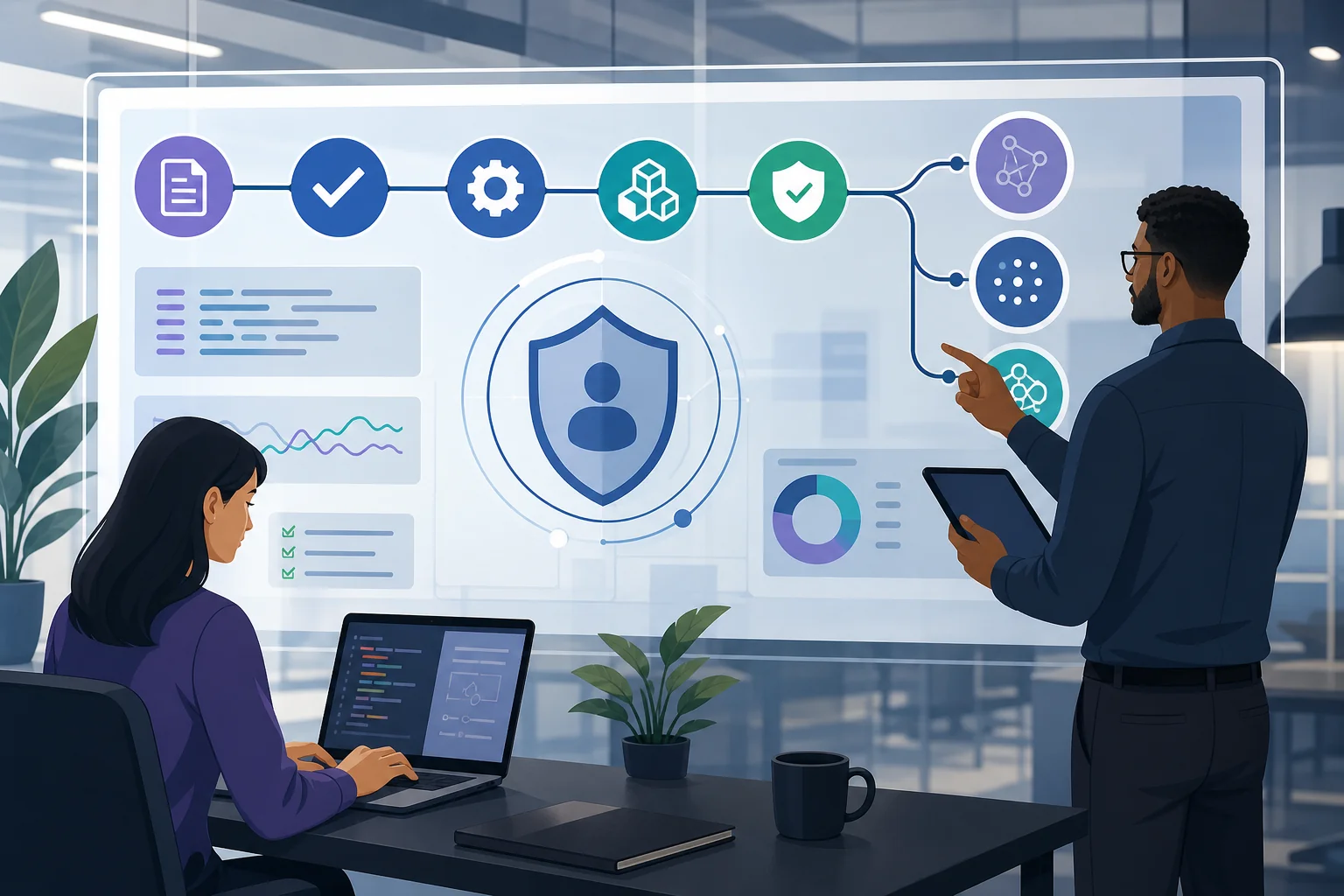
GitLab Inc. released version 19.4 on September 21, 2026, introducing a framework for governing autonomous AI agents within enterprise software delivery pipelines. The update focuses on reconciling the efficiency of agentic execution with the requirements for cost transparency and security oversight in complex engineering environments.
The platform introduces terminal-based goal delegation through the GitLab Duo CLI, allowing developers to assign high-level objectives that agents execute via iterative, verifiable workflows. This mechanism relies on human-in-the-loop checkpoints to validate progress against project-specific rules before task completion.
To address the rising costs of AI-assisted development, GitLab 19.4 incorporates support for open weight models including Kimi K3, MiniMax M3, and GLM 5.3. These additions enable organizations to route routine coding tasks to lower-cost models while reserving high-parameter frontier engines for complex architectural reasoning.
The release expands the Model Context Protocol (MCP) server capabilities, allowing third-party AI clients to interface with GitLab workflows for pipeline management and vulnerability triage. Security controls are enforced by default, requiring human approval for write or delete operations while maintaining read-only access for automated agents.
Granular credit tracking has reached general availability, providing platform owners with real-time dashboards and per-user consumption caps. This feature aims to mitigate the risk of runaway infrastructure spending by providing visibility into billable events at the individual developer level.
By extending existing role-based access controls to autonomous agents, the platform attempts to eliminate the need for secondary security layers or isolated API management. This integration ensures that AI agents operate under the same audit logs and compliance constraints as human contributors within the development environment.
The shift toward tiered model architectures reflects a broader move away from reliance on expensive, monolithic frontier models for all development tasks. Organizations can now implement a multi-model strategy that aligns compute expenditure with the technical complexity of the specific task at hand, ensuring that resources are allocated efficiently across the entire development lifecycle.
The implementation of the Model Context Protocol provides a standardized interface that allows disparate AI clients to interact with internal repositories without requiring custom middleware. This interoperability significantly reduces the technical debt associated with maintaining proprietary integrations while ensuring that security policies remain consistent across the entire CI/CD stack, regardless of the specific AI tool being utilized by the engineering team.
Enterprise technology leaders must evaluate the trade-offs between the speed of autonomous workflows and the potential for increased attack surfaces within CI/CD pipelines. The reliance on human-in-the-loop checkpoints serves as a critical mitigation strategy against the risk of rogue agents injecting vulnerabilities into production code.
Standardization through the Model Context Protocol offers a path toward reducing vendor lock-in by enabling interoperability between GitLab and external AI tools. This architectural approach allows teams to maintain a consistent security posture even as they integrate diverse AI clients into their existing stack.
Platform architects should monitor the performance of open weight models in production to determine if they meet the accuracy requirements for specific internal use cases. Future deployments will likely require ongoing calibration of these models to balance cost-efficiency with the necessity for high-quality code generation.
The long-term success of these agentic tools depends on the ability of engineering teams to define clear, bounded objectives that minimize the risk of unverified code execution. As these systems mature, the focus will shift toward automating more complex architectural tasks while maintaining strict oversight of the underlying infrastructure costs.
Engineering leads should prepare for the transition by auditing existing AI usage patterns to identify which tasks are suitable for lower-cost open weight models. Establishing these operational guardrails now will ensure that the integration of autonomous agents remains sustainable as development teams scale their AI-driven workflows.
TAGGED
REFERENCED
- Model Context Protocol (MCP)anthropic.com
RELATED INTELLIGENCE
- DEVOPS
Optimizing Enterprise Architecture Through Iterative Gap Analysis
Moving beyond static assessments requires integrating real-time telemetry and strict scoping to align technical debt remediation with business objectives.
- DEVOPS
Automating Kubernetes Security Governance with Kubescape
Kubescape provides a systematic approach to auditing containerized environments by integrating security policy enforcement directly into the CI/CD pipeline.
- DEVOPS
Expedia Deploys Deterministic AI for Observability and Incident Response
Expedia Group has integrated an internal AI-assisted observability platform to streamline incident investigation through deterministic workflows and structured telemetry analysis.