Automating Kubernetes Security Governance with Kubescape
Kubescape provides a systematic approach to auditing containerized environments by integrating security policy enforcement directly into the CI/CD pipeline.
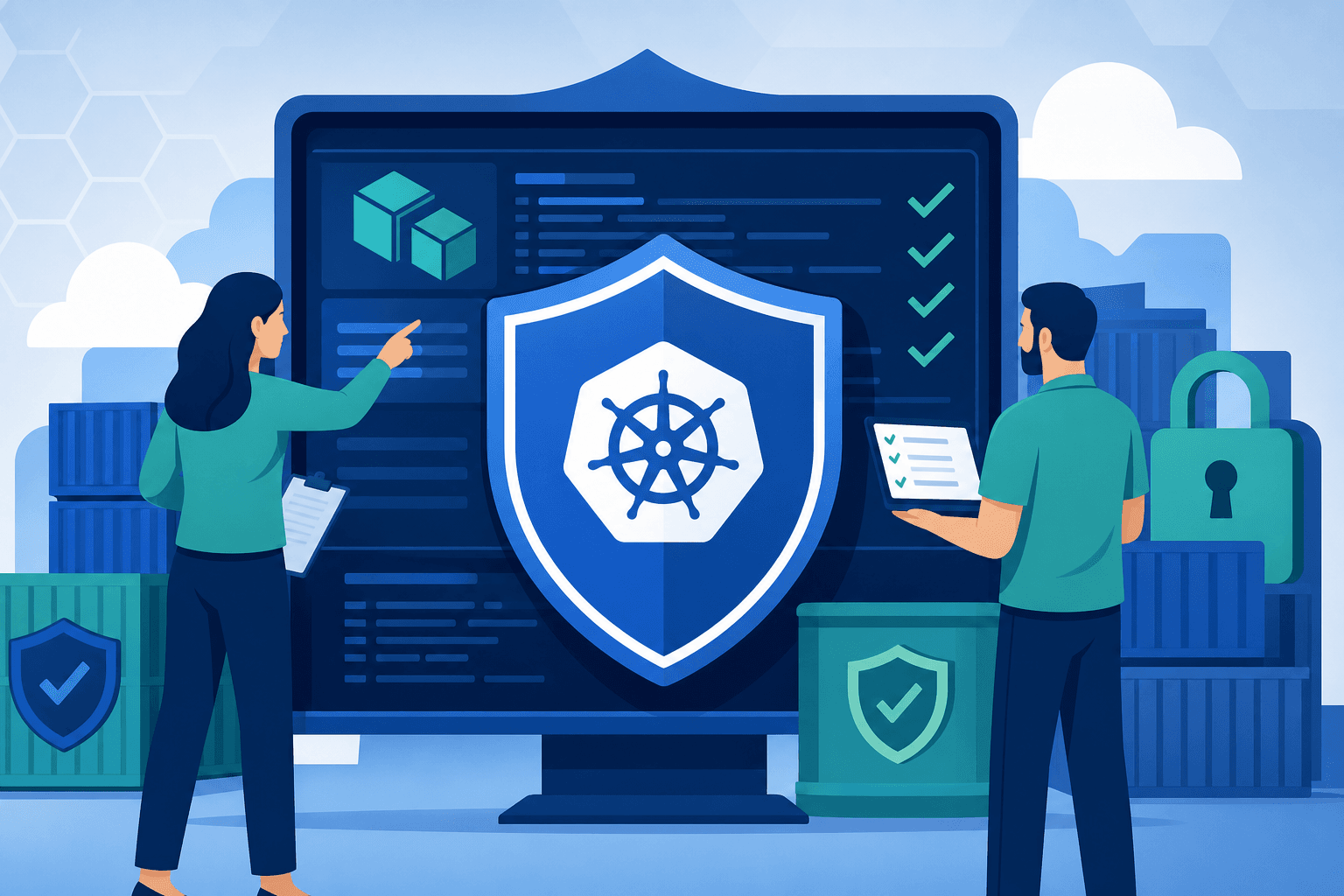
Kubernetes security often fails at the intersection of developer intent and operational reality, where valid YAML manifests frequently bypass critical security controls. Kubescape, a security scanner developed under the Cloud Native Computing Foundation, addresses this gap by auditing manifests, container images, and active cluster configurations against established hardening frameworks.
According to technical documentation from the CNCF, the tool evaluates infrastructure against industry-standard benchmarks, including NSA-CISA hardening guidance and the MITRE ATT&CK framework. By utilizing the Open Policy Agent engine, it identifies misconfigurations such as excessive privilege escalation, missing resource limits, and the unnecessary mapping of service account tokens. These checks occur before deployment, preventing the introduction of vulnerabilities into the production environment.
Scanning container images for vulnerabilities represents a secondary layer of defense within the Kubescape workflow. The scanner integrates with Grype to identify CVEs within base images, providing actionable data on available patches. This capability allows engineering teams to address security debt by rebuilding images with updated dependencies rather than relying on manual audit processes.
Operationalizing these scans within a CI/CD pipeline requires defining specific compliance thresholds. When integrated into automated workflows, Kubescape can trigger non-zero exit codes upon detecting policy violations, effectively blocking insecure deployments. This mechanism enforces governance at the point of commit, ensuring that infrastructure-as-code adheres to organizational security standards.
The tool also facilitates remediation by generating machine-readable JSON output that can be piped into automated fix scripts. While this feature allows for the rapid correction of misconfigurations, it necessitates rigorous testing to prevent operational disruptions. Automated changes to YAML files, such as enforcing read-only filesystems, must be validated against application requirements to ensure compatibility.
Integrating Open Policy Agent within complex enterprise pipelines introduces specific challenges, particularly regarding policy consistency across heterogeneous environments. Architects must manage the overhead of maintaining OPA bundles, ensuring that security policies remain synchronized across multiple clusters and development teams. This requires a centralized policy management strategy to prevent drift between local development environments and production infrastructure, as inconsistent policy enforcement can lead to security gaps that are difficult to debug in large-scale deployments.
Scanning a live Kubernetes cluster provides visibility into the actual security posture of the environment, capturing configurations that may have been applied manually. By scoping these scans to specific namespaces, platform engineers can isolate findings and prioritize remediation efforts for critical workloads. This approach helps distinguish between legitimate system-level privileges and genuine security risks within the cluster.
The effectiveness of automated security scanning relies on the consistent application of policy across the entire software development lifecycle. Relying solely on cluster-level audits often results in reactive security, where vulnerabilities are identified only after they have been exposed to the network. Shifting these checks to the manifest-validation phase creates a proactive security posture that reduces the attack surface of containerized applications.
Enterprise architects should evaluate how these automated controls integrate with existing governance frameworks and incident response protocols. The ability to generate standardized reports simplifies compliance auditing and provides clear remediation guidance for development teams. Monitoring the impact of these automated gates on deployment velocity remains a key metric for balancing security requirements with operational efficiency.
Future adoption of such tooling will likely focus on the refinement of custom policy sets tailored to specific regulatory environments. As Kubernetes clusters grow in complexity, the ability to enforce granular security policies at scale will become a primary requirement for maintaining infrastructure integrity. Leaders should monitor the evolution of these scanning capabilities as they move toward more sophisticated, policy-driven orchestration models.
The transition toward policy-as-code ensures that security is not an afterthought but a foundational component of the deployment pipeline. By codifying security requirements into the CI/CD process, organizations can minimize human error and ensure that every resource deployed to the cluster meets defined compliance standards. This systematic approach is essential for managing risk in large-scale, distributed environments where manual oversight is no longer feasible.
TAGGED
REFERENCED
- Grypegithub.com
RELATED INTELLIGENCE
- DEVOPS
Optimizing Enterprise Architecture Through Iterative Gap Analysis
Moving beyond static assessments requires integrating real-time telemetry and strict scoping to align technical debt remediation with business objectives.
- DEVOPS
GitLab 19.4 Integrates Agentic Governance into CI/CD Pipelines
The latest GitLab release introduces terminal-based goal delegation and multi-model support to balance autonomous software development with enterprise security and cost controls.
- DEVOPS
Expedia Deploys Deterministic AI for Observability and Incident Response
Expedia Group has integrated an internal AI-assisted observability platform to streamline incident investigation through deterministic workflows and structured telemetry analysis.