NetApp Integrates DataPelago to Shift AI Processing to Storage Layer
The acquisition of DataPelago aims to reduce data movement latency by embedding compute engines directly into the storage infrastructure.
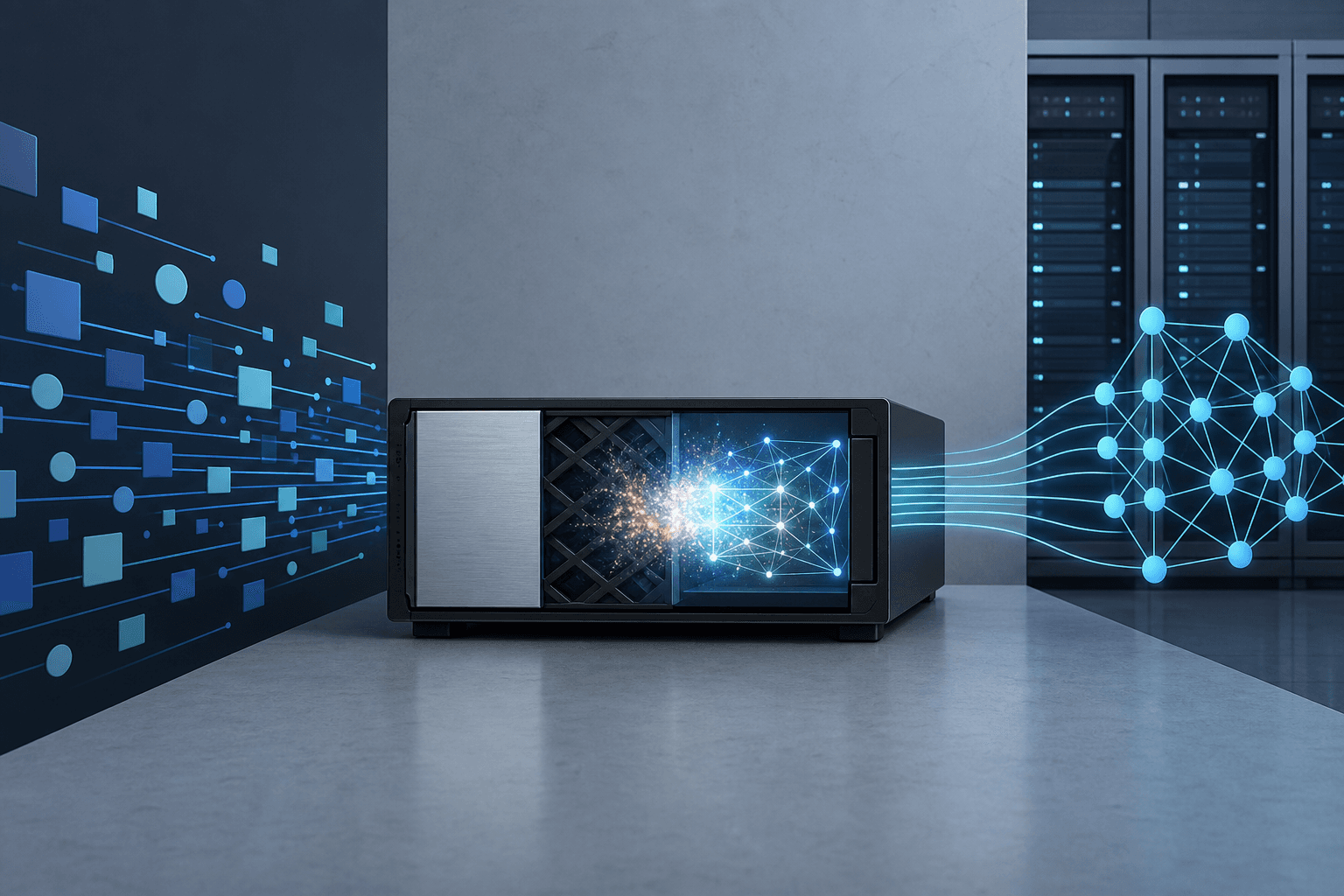
NetApp finalized the strategic acquisition of DataPelago on July 17, 2026, to integrate specialized AI data infrastructure into its existing storage framework. According to the official announcement from the company, this transaction targets the persistent latency and cost issues associated with moving large-scale datasets from storage environments to external compute clusters for machine learning preparation.
Data engineering teams currently face significant operational friction when attempting to pipeline proprietary data into production-ready AI models. The standard requirement to duplicate and stage data into secondary systems creates security vulnerabilities and increases total cost of ownership through egress fees and redundant storage requirements. DataPelago provides a mechanism to bypass these staging phases by processing data where it resides.
The core technology acquired is the Nucleus engine, a software-defined processing layer capable of executing tasks across both CPU and GPU hardware. By embedding this engine directly within the storage environment, the architecture allows for the analysis of complex data structures without the need for traditional ETL pipelines. This shift aims to optimize hardware utilization by keeping compute resources close to the data source.
Technical benchmarks provided by the firm indicate that this approach can reduce underlying infrastructure expenditures by up to 80% in specific high-throughput scenarios. By eliminating the need to move files to external staging environments, the engine accelerates execution speeds by up to ten times compared to legacy methodologies. This reduction in data movement is designed to alleviate the primary compliance and security friction points that often delay corporate machine learning rollouts.
The integration also addresses the challenge of hardware underutilization in modern enterprise environments. When data remains fragmented across secondary systems, expensive GPU resources often sit idle while waiting for data to be prepared and moved across the network. The Nucleus engine stabilizes these workloads by providing a more direct path from raw data to model ingestion, effectively maximizing the return on investment for existing hardware assets.
George Kurian, Chief Executive Officer at NetApp, stated that the acquisition is intended to provide customers with greater agility in processing data for AI workloads. The firm aims to address the bottleneck where expensive GPU resources remain idle while waiting for data to be prepared and moved across the network. This integration is designed to stabilize high-throughput workloads for large-scale enterprise environments.
Rajan Goyal, Founder and Chief Executive Officer of DataPelago, noted that the collaboration focuses on eliminating the structural barriers that prevent AI models from reaching production scale. The combined entity intends to provide a unified framework that governs raw datasets before they are ingested by AI models. This approach seeks to simplify the data lifecycle for organizations managing massive, fragmented data reserves.
Syam Nair, Chief Product Officer at NetApp, highlighted that the Nucleus engine enables zero-copy data activation by performing computations directly at the storage layer. This capability is intended to assist Chief Information Officers in extracting insights from dark data without violating compliance or data sovereignty requirements. The technology effectively treats the storage layer as an active participant in the compute cycle rather than a passive repository.
Enterprise leaders should evaluate how this shift toward in-storage processing affects their existing data governance and security models. While the reduction in data movement promises lower latency and decreased infrastructure costs, the transition requires a re-evaluation of how data pipelines are orchestrated. Monitoring the performance benchmarks of the integrated Nucleus engine will be critical for determining its viability in production-grade environments.
The long-term impact of this acquisition depends on how effectively NetApp can scale this software-defined approach across its diverse storage portfolio. Future milestones will include the release of technical documentation and performance validation for specific hybrid-cloud deployment scenarios. Organizations should watch for how this technology interacts with existing data sovereignty protocols as they scale their AI infrastructure.
TAGGED
REFERENCED
- George Kurian, Chief Executive Officeraimmediahouse.com
RELATED INTELLIGENCE
- INFRASTRUCTURE
BSEC Proposes Unified Back-Office Architecture to Mitigate Brokerage Fraud
The Bangladesh Securities and Exchange Commission is evaluating a centralized software framework to standardize brokerage monitoring and prevent asset misappropriation.
- INFRASTRUCTURE
Legrand Integrates Karman AI to Optimize Data Center Power Distribution
The partnership aims to reclaim stranded power capacity in high-density AI environments through edge-based intelligence.
- INFRASTRUCTURE
AI Infrastructure Choices Define Cost Attribution Limits
Enterprise architectural decisions regarding managed versus self-hosted compute environments determine the feasibility of granular AI cost governance.