AWS Rebuilds EventBridge Architecture with Enhanced Custom Event Buses
The new EventBridge architecture addresses long-standing technical debt by introducing native cross-account routing and refined subscriber management.
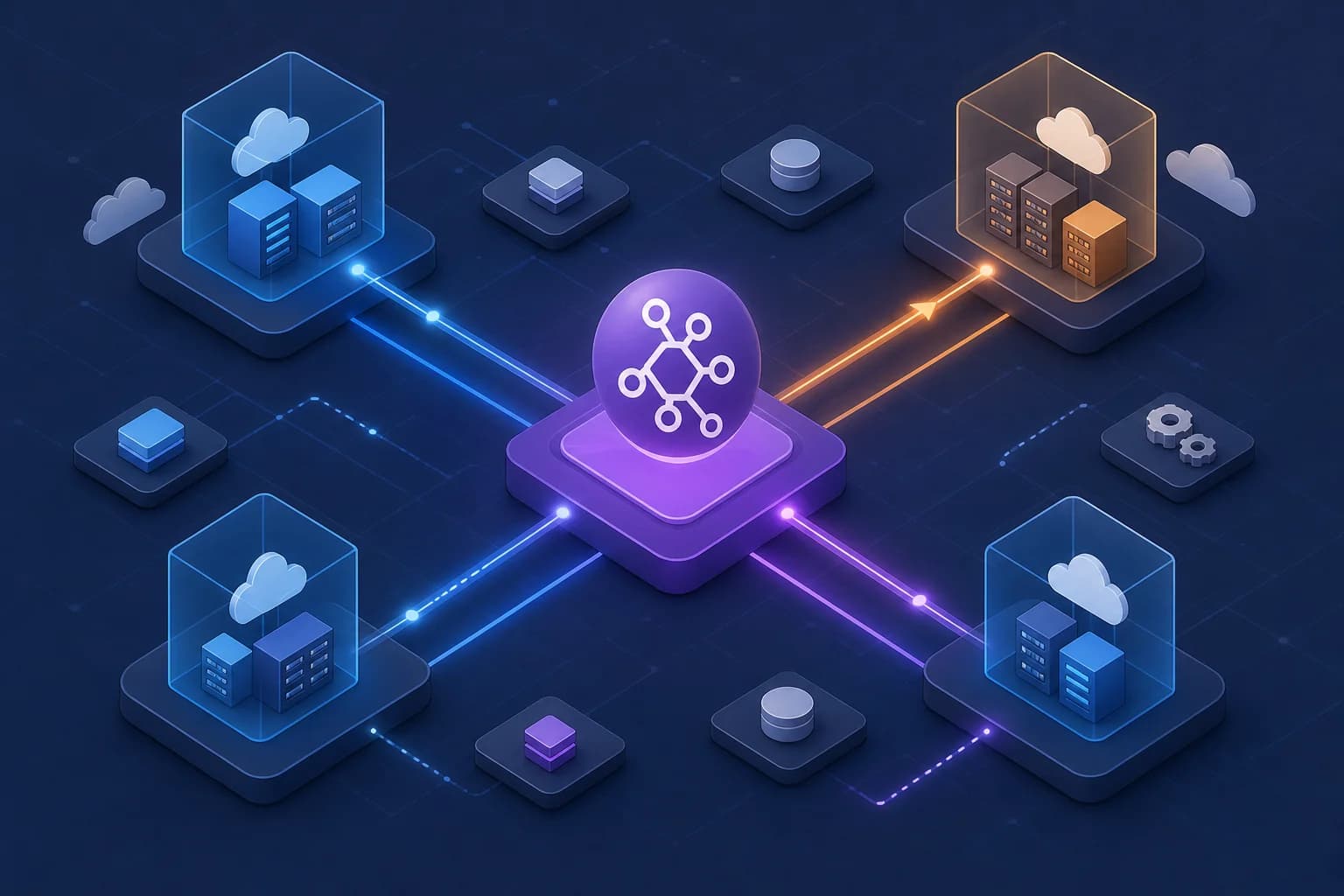
Amazon Web Services has launched enhanced custom event buses for Amazon EventBridge, a significant architectural shift that moves away from the limitations of the original 2019 implementation. This update introduces native support for cross-account event publishing, ordered delivery, and content-based deduplication, addressing technical debt that previously forced platform teams to construct complex, high-latency workarounds.
The new architecture centralizes event management, allowing organizations to maintain a single bus across multiple accounts rather than managing fragmented, interconnected buses. By integrating JSONata-based transformation directly into the bus, AWS enables developers to manipulate payloads without relying on external compute resources. Support for Avro and Protobuf serialization protocols further aligns the service with standard enterprise messaging patterns found in high-throughput environments.
A critical component of this release is the new Subscriber resource, which consolidates filtering, target configuration, and dead-letter queue management into a unified construct. This consolidation reduces the operational surface area for platform engineers, who previously struggled to maintain visibility into event subscriptions across large-scale AWS estates. The design prioritizes resilience by embedding retry logic and error handling directly into the subscriber lifecycle.
The pricing model has also undergone a fundamental transition, moving to a decoupled ingress and egress throughput structure. Publishers are now billed for ingested events, while subscribers incur costs based on delivered events, providing clearer visibility into the cost drivers of event-driven architectures. This separation of concerns allows for more precise financial modeling of event-driven traffic patterns within complex microservices environments.
By eliminating the need for custom-built routing layers, the enhanced buses reduce the architectural overhead that often contributes to jitter and increased end-to-end latency in distributed systems. This native approach allows for more predictable performance profiles when scaling event-driven workloads across diverse AWS regions. The reduction in hop counts between producer and consumer services directly addresses the performance bottlenecks inherent in previous multi-bus configurations.
Jamie Dool, principal product manager at AWS, stated that the original service design struggled to scale alongside the evolving requirements of modern distributed systems. The new resource is built from the ground up to accommodate these demands, aiming to provide the scale and reliability necessary for enterprise-grade event orchestration. This shift represents an acknowledgement that early design decisions regarding bus routing and cross-account permissions were no longer sufficient for contemporary cloud-native workloads.
Industry observers have noted the functional parallels between this enhanced offering and traditional message brokers like Apache Kafka, though the implementation remains distinctly managed. Gregor Hohpe, an architect and former director of enterprise strategy at AWS, characterized the update as a significant advancement for the platform. While the move toward a more robust, enterprise-focused feature set is clear, the underlying infrastructure remains optimized for the AWS ecosystem, reinforcing the platform’s role as the primary orchestrator for serverless event flows.
Corey Quinn, chief cloud economist at The Duckbill Group, noted that the cost structure is competitive for most organizations despite the ingestion fee of 18 cents per gigabyte. The primary value for enterprise architects lies in the reduction of custom-built infrastructure, which often introduces hidden maintenance costs and security risks. By moving these capabilities into the managed service layer, AWS is effectively commoditizing features that were previously considered specialized engineering tasks.
Architects must now evaluate the trade-offs between migrating existing workloads to the enhanced bus or maintaining legacy configurations. While the new resource offers superior capabilities, the migration process requires careful planning regarding event schemas and subscriber configurations. Organizations should monitor the performance metrics of these new buses during high-load scenarios to ensure that the throughput-based pricing remains aligned with their long-term operational budget.
The long-term impact of this update will depend on how effectively AWS integrates these enhanced buses with other serverless services. Future milestones will likely include deeper integration with governance and compliance tools, as centralized event buses become the primary conduit for data movement across regulated environments. Platform teams should prioritize auditing their current event-driven topologies to identify where these new capabilities can replace brittle, custom-coded routing logic.
TAGGED
REFERENCED
- Gregor Hohpearchitectelevator.com
RELATED INTELLIGENCE
- CLOUD
Oracle Analyst Sentiment Diverges Amid Cloud Infrastructure Expansion
Recent shifts in brokerage price targets reflect complex market reactions to Oracle’s evolving enterprise cloud and database strategy.
- CLOUD
Modernizing Enterprise Case Management Through Unified Data Architecture
Senior architect Rajarshi Krishna Muppaneni details the shift toward integrated digital ecosystems to eliminate operational silos and improve regulatory compliance.
- CLOUD
Whatfix Leadership Transition Following Death of CEO Khadim Batti
The sudden passing of Whatfix co-founder Khadim Batti prompts an evaluation of the firm’s operational stability and future roadmap for enterprise software adoption.